- Can you tell us about yourself?
Hey! My name is João Miguel Ferreira Magalhães, and I’m currently studying for a master’s degree in Industrial Management and Decision Making at ESTG.
My profile is somewhat hybrid: in addition to my academic studies, I have eight years of professional experience in the industrial sector, more specifically in the shoe components industry, where I worked as an administrative assistant focusing on production planning, stock control, and logistics.
Through my professional experience and academic studies have developed my aptitude and interest in areas such as data analysis, process optimisation, and the practical application of data for decision-making in relation to management.
- How did you discover this opportunity for Mobility?
Having closely followed the communications from the International Office (GRI), I have always wanted to enrich my academic career with international experience. The BIP (Intensive Semi-Presential Program) appeals to me because it is compatible with my professional and academic life, allowing for intensive immersion in a short period of time.
This particular BIP (“Future Craft”) immediately caught my attention because it combines exactly the two areas I am exploring in my master’s degree: cutting-edge technology (Additive Manufacturing) and business management.
- What were the main goals of your visit to the Receiving University?
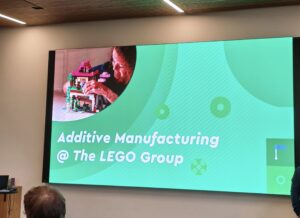
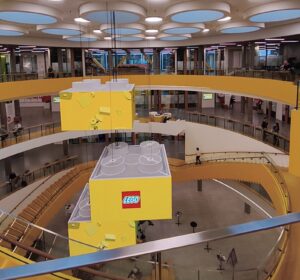
My main goal in participating in the “Future Craft: Designing Business with Additive Manufacturing” programme in Denmark was to gain an understanding of how emerging technologies, such as additive manufacturing, can redefine business models and supply chains. Furthermore, I was keen to visit the LEGO Group and gain an insight into the operational excellence of a global brand. I wanted to see firsthand how theory is applied in practice at one of the world’s most innovative companies.
It has always been interesting for me to meet new people, cultures, places, and even languages because I feel that I always grow or learn something, or develop a better understanding of different points of view and ways of looking at things in life. In addition, I also saw the programme as a way to get out of my comfort zone. In an academic environment and with students of different nationalities and different areas of study, it ends up being a good challenge for me, especially looking to the future in situations where I am integrated into multidisciplinary and international teams.
- What did you think of the physical mobility part of the mobility?
It was a profoundly immersive strategic experience. The week between Kolding and Billund exceeded all expectations. IBA provided a fantastic learning environment that was highly practical and collaborative. Visiting the LEGO facilities was not just a sightseeing tour, but a masterclass in operations, strategy, and corporate heritage.
- What has your experience been like?
It was transformative. I worked on a real challenge: the “LEGO® Functional Add-Ons Challenge”. My group developed a prototype based on functional innovation for a specific LEGO Technic product. It was very interesting to be able to use the engineering knowledge that my IBA colleagues had, particularly in product design and more specifically in 3D printing. My role focused on defining the logistics plan and the business model (VCM). It was incredibly rewarding to see how industrial management can validate the viability of an engineering project. Presenting these ideas to senior LEGO managers (such as Jessica Riley and Ronen Hadar) was a real professional highlight. Furthermore, collaborating with colleagues of various nationalities greatly enriched my perspective on teamwork.
Beyond my academic achievements, I really enjoyed exploring Denmark and its culture, customs, as well as its high level of organisation, especially the efficient and collaborative approach to university education.
- What do you think of this new type of mobility (BIP – Blended Intensive Programme)?
The BIP format is perfect for those who work or have a busy academic and professional life. It allows for a focused and concise international overview, without the need to pause your career or studies for an entire semester. It’s “short and to the point” in terms of learning and networking. In my case, it has already allowed me to participate in other editions (in Belgium, Hungary and Cyprus), which demonstrates how much I value this model.
- What were the most exciting moments of your visit? Would you recommend Receiving University to your fellow colleagues?
I can highlight four moments that stood out to me:
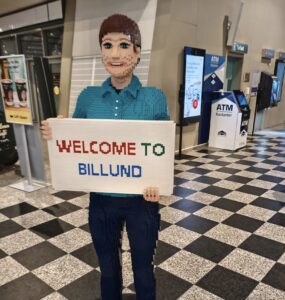
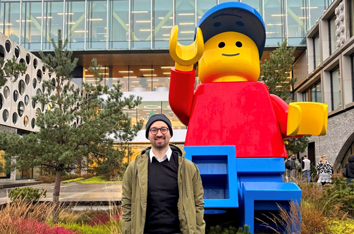
- A visit to the LEGO Group factory and headquarters in Billund: witnessing the logistical excellence and organizational culture of a company of this size was inspiring for any industrial management student.
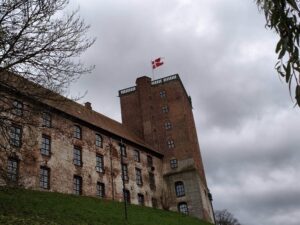
- The visit to Kolding Castle (Koldinghus): exploring this historical landmark was fascinating. The way the castle blends its medieval history with modern restoration is impressive and allowed me to better understand the culture and identity of the city that hosted us.
- The final pitch presentation: presenting our strategic and technical solution to industry experts and receiving direct feedback on the viability of our business model and logistics plan.
- The cultural immersion: getting to know Denmark, its social organization, and its collaborative approach to education and work.
- Did your experience differ from the expectations you had of this visit?
Yes, in a positive way. I expected to learn a little bit more about 3D printing, but it also enhanced my strategic vision and the necessary skills to drive sustainable and digital transformation in industrial management, focusing on global business strategy, innovation management, and sustainability. The level of access we had to the industry and the quality of the guest speakers far exceeded my expectations.
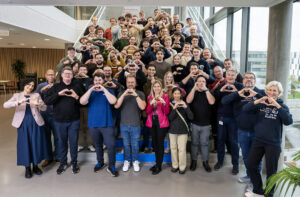
On an interpersonal level, the experience was life-changing. I had the privilege of being part of a fantastic group of people—colleagues, teachers, speakers, staff—from different cultures and backgrounds, where the spirit of mutual support and sharing was constant. This diversity not only enriched our work with multiple perspectives but also allowed me to create genuine human connections and broaden my horizons far beyond the classroom.
- What stereotype or misconception about your host country/city that you’ve come to realise isn’t true?
There’s a stereotype that Danes are distant or “cold.” However, I realised this isn’t true, but rather a misinterpretation of their culture. They dispense with excessive politeness in their interactions, not out of a lack of education, but because they value equality above all else; there are no visible “ranks” or social statuses, which makes communication very genuine and horizontal. I was also surprised by their very peculiar and direct sense of humour, which they use to simplify daily life. Finally, I realised that what we sometimes mistake for distance is, in fact, a great appreciation for individual privacy. They greatly respect each other’s space, but when they interact, they do so with complete transparency.
- Additional comments, feel free to add pictures if you want
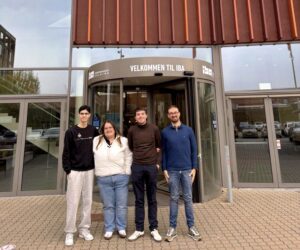
Finally, I would like to express my very special appreciation to my colleagues at ESTG — Bruno, Diogo, and Marina. Our dynamic during the week was marked by a nice spirit of unity and mutual support. The fantastic environment we created not only facilitated the daily challenges but also generated good companionship that brought us much closer. More than just colleagues from the institution, we were true supporters for each other, transforming this professional exchange into a friendship that I will carry into the future.
|
|
|
|
|
|